

Let’s start a journey that brings your vision to life! 40 hours proof of concept for $2,500. Send your brief →

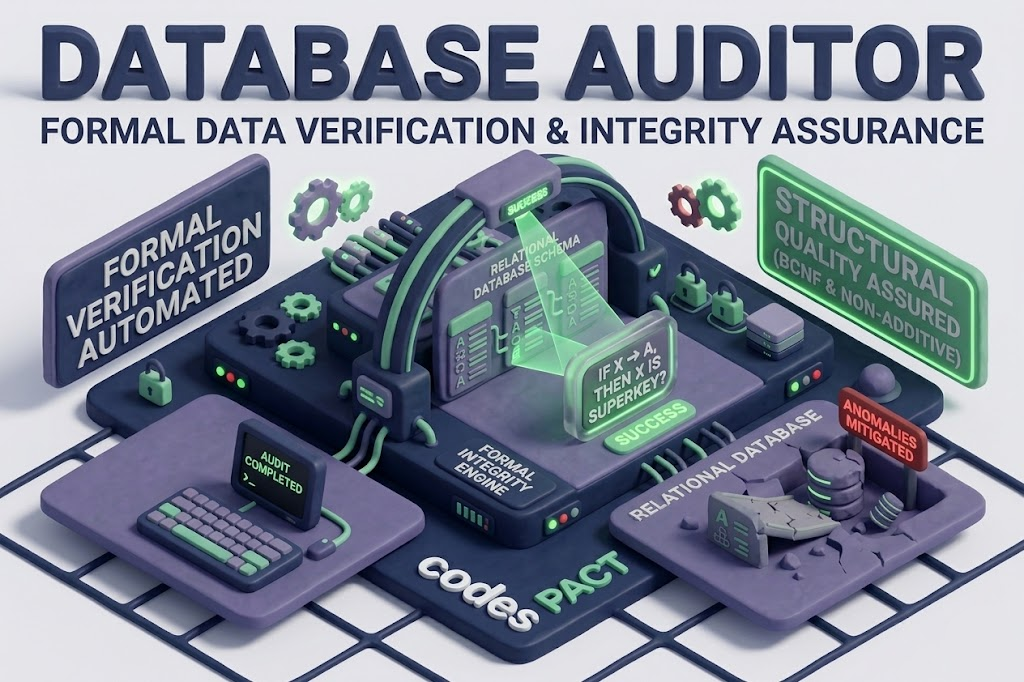
Data is a company’s most valuable asset, yet database design is often treated as an afterthought. We built and open-sourced Database Auditor to bridge the gap between theoretical database design and practical execution. It is a robust CLI tool designed to automatically validate database schemas against complex mathematical models, ensuring structural integrity before technical debt ever reaches production.
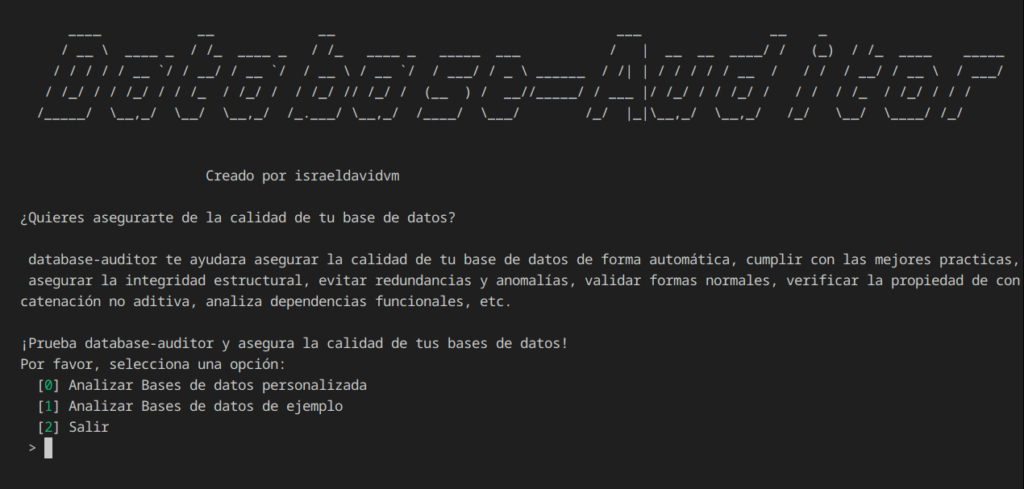
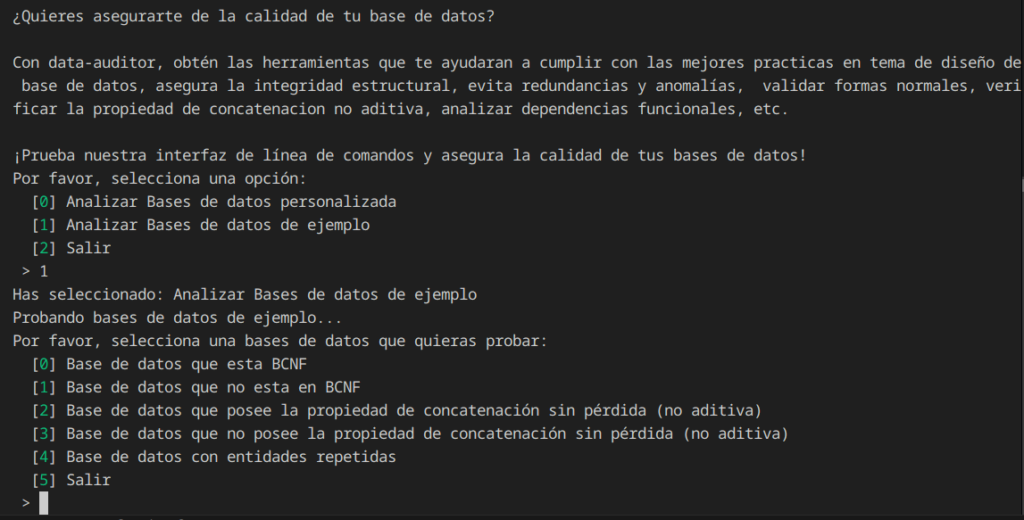
The Problem: The Hidden Cost of Bad Schema Design
A poorly designed database is a ticking time bomb. As applications scale, redundancies, update anomalies, and structural flaws inevitably lead to massive refactoring costs, data corruption, and severe performance bottlenecks.
Manually verifying that a complex, evolving schema adheres to best practices—like Boyce-Codd Normal Form (BCNF) or ensuring non-additive concatenation properties—is a laborious and error-prone process. Teams needed a way to automate formal mathematical verification and integrate it directly into their workflows.
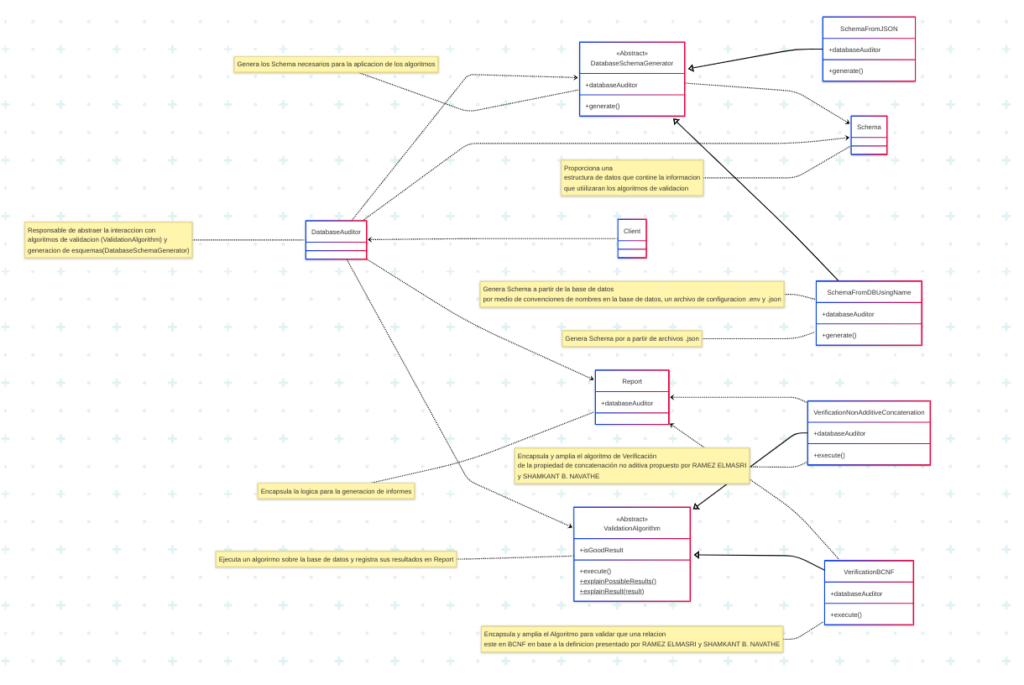
The Solution: Algorithmic Verification via CLI
To eliminate the guesswork in database architecture, we engineered a comprehensive auditing suite. Built around a flexible Strategy Pattern, the system can dynamically ingest schemas directly from the database or via configuration files, and then apply rigorous validation algorithms.
The Impact
Database Auditor transforms database validation from an academic exercise into an automated, actionable engineering standard. By catching structural vulnerabilities early, it protects the core data layer, ensuring long-term scalability and flawless data integrity for enterprise applications.
The Architecture Behind the Build Complex integrations require a clear vision. The underlying architecture and core development of Database Auditor were spearheaded by our Solutions Architect, Israel Villaroel, ensuring the system wasn’t just intelligent, but built to scale and deploy seamlessly into real-world enterprise environments.