

Let’s start a journey that brings your vision to life! 40 hours proof of concept for $2,500. Send your brief →

Edge computing is redefining how applications process data. We built this Computer Vision engine not just to classify images, but to demonstrate a full end-to-end Machine Learning pipeline that executes deep learning inference directly within the user’s browser using TensorFlow.js.
The Problem: Cloud Latency and Server Overload
Traditional ML architectures rely on sending heavy payloads (like images or video feeds) to cloud servers for processing. This approach introduces latency, raises strict data privacy concerns, and scales backend server costs exponentially. The engineering challenge was to build a highly accurate Convolutional Neural Network (CNN) that is lightweight enough to run client-side without sacrificing predictive power.
The Solution: A Full Lifecycle ML Pipeline
To achieve real-time browser inference, we engineered a rigorous pipeline spanning from data ingestion to frontend deployment.
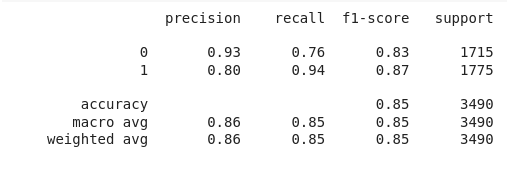
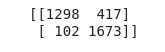
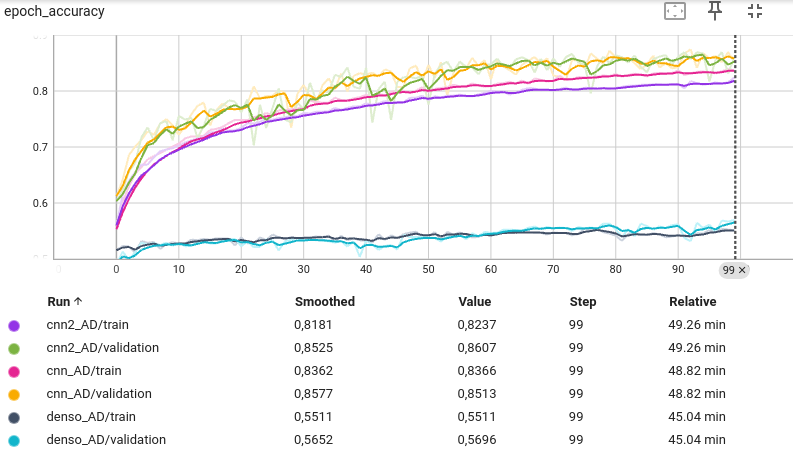
cnn2_AD) drastically outperformed the standard dense network. The graphs clearly show how the CNN minimized data loss and maximized validation accuracy while successfully preventing overfitting.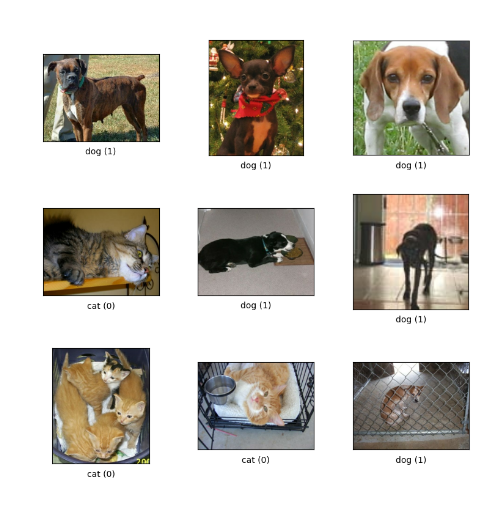
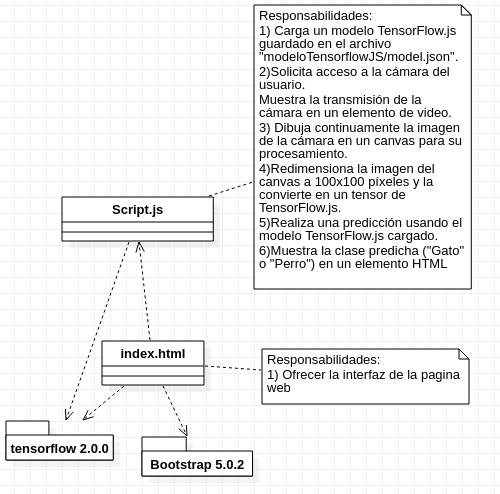
Script.js safely intercepts the local webcam feed, converts the video frames into tensors, and performs real-time classification directly within the index.html DOM—requiring absolutely zero backend API calls.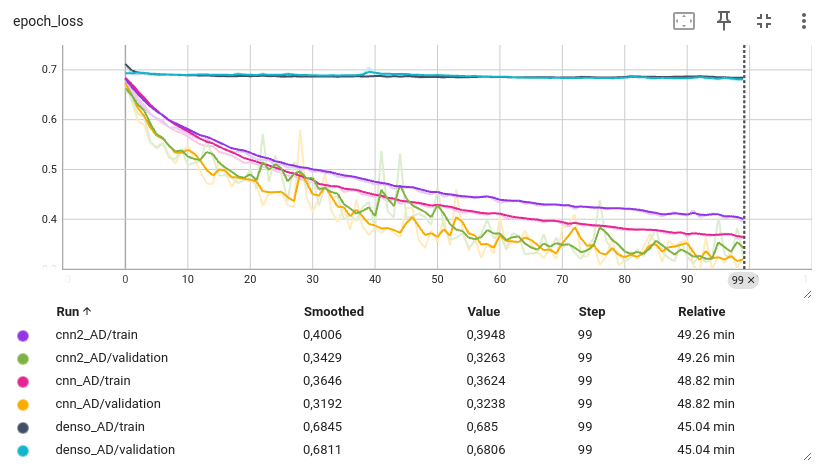
The Impact
By shifting the computational load from the cloud directly to the client’s device, this architecture enables real-time, zero-latency computer vision. It serves as a scalable, privacy-first blueprint for enterprise applications requiring instant object detection, automated visual QA, or secure biometric processing.
The Architecture Behind the Build Complex integrations require a clear vision. The underlying architecture and core development of Edge AI Vision were spearheaded by our Solutions Architect, Israel Villaroel, ensuring the system wasn’t just intelligent, but built to scale and deploy seamlessly into real-world enterprise environments.